Here is something most homeowners in the Pacific Northwest do not find out until it is too late: a fire does not stop destroying your home when the flames go out. The process just goes invisible. Soot and smoke residues begin reacting with metal surfaces, bonding to porous materials, and seeping into electronics within hours of a fire, and by the time any of it is noticeable, the damage has often already compounded beyond what cleaning alone can address.
Whether you are dealing with the aftermath in Seattle, searching for fire damage restoration, or facing the same situation further north in Everett, Renton, or Bellingham, WA, the reality on the ground is the same: the clock starts the moment the flames go out, not the moment you call for help.
The U.S. Fire Administration reports that over 350,000 residential fires happen across the country every year, and cooking is the leading cause.
The first 48 hours after a fire are not just important. They are the window that determines whether your property gets restored or replaced.
What Triggers Corrosion After a Fire?
1. What is soot made of?
Most people look at soot and see black residue. What is actually settling across your kitchen and living spaces is a chemically active mixture of carbon particles, acidic compounds, chlorides, and sulfides, all byproducts of burned plastics, wiring insulation, and synthetic materials. These compounds do not sit passively on surfaces. They react, and they do it fast. This is the core mechanism behind fire-damage corrosion, and it is far more aggressive than it appears.
2. How do acidic residues form after a fire?
Once smoke settles and residues mix with the moisture naturally present in the air, they form acidic films across every surface they contact. The unsettling part is that these films are invisible. There is no warning, no visible indicator that a reaction is underway, which is exactly why so many homeowners do not call for help quickly enough.
3. Why corrosion starts faster than most people expect
The climate in the Pacific Northwest compounds this. Homes in Kirkland, Redmond, Everett, and much of the greater Seattle area regularly have indoor humidity levels that accelerate chemical reactions on exposed materials. The Environmental Protection Agency has noted that indoor humidity above 60% substantially increases the rate of material degradation.
Why are the First 48 Hours So Critical?
1. What happens within the first 24 hours?
In the first 24 hours, metal surfaces start to tarnish, soot works its way into porous materials like grout and drywall, and the internal components of nearby electronics begin oxidizing. You will not see most of this happening, which makes the fire damage restoration timeline so easy to underestimate.
2. How does damage escalate between 24 and 48 hours?
| Timeframe | What Is Actively Happening |
| 0 to 24 Hours | Residues bond to surfaces; contamination spreads through the home |
| 24 to 48 Hours | Corrosion accelerates; discoloration and staining begin to set permanently |
| Beyond 48 Hours | Metal pitting, electronic failure, and irreversible structural damage become likely |
3. When does restoration become impossible?
Once the 48-hour mark passes, certain outcomes are simply off the table. Permanent pitting in stainless steel, discoloration that no polish can lift, and circuit board corrosion that cannot be cleaned away are all realistic outcomes. At that point, fire damage restoration gives way to replacement, and replacement costs considerably more.
How Does Fire Damage Affect Kitchen Fixtures?
1. Which kitchen materials are most vulnerable?
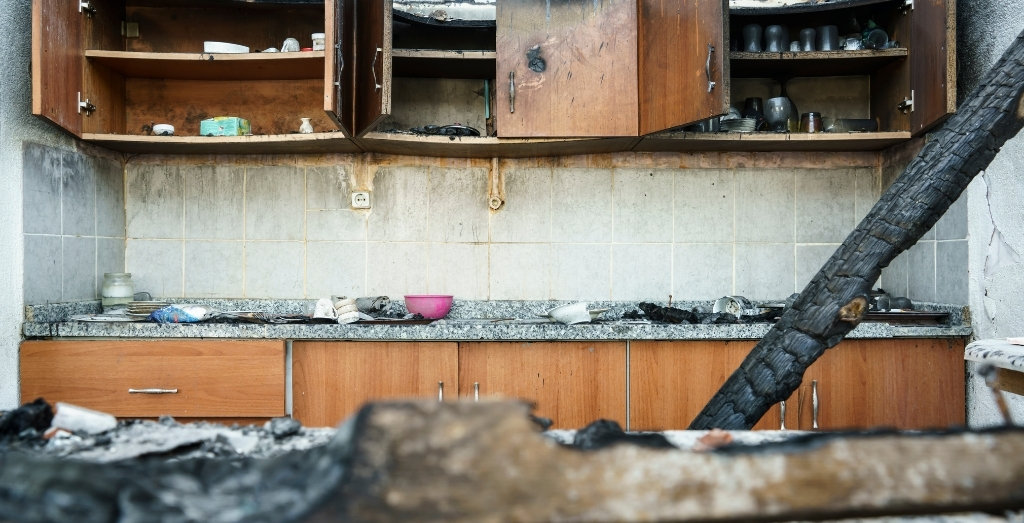
Kitchens tend to take the worst of it because of the high concentration of reactive materials in one space. Chrome hardware, stainless steel appliances, painted cabinet finishes, and stone or laminate countertops are all susceptible in different ways and on different timelines.
2. Why do surfaces stain and degrade so quickly?
Grease fires, which account for a large share of kitchen incidents, leave behind oily, adhesive residues that do not respond to ordinary cleaning. These residues drive yellowing, surface etching, and odors that intensify over time rather than fading. Soot damage to kitchen appliances is genuinely one of the most underreported consequences of kitchen fires, even relatively minor ones.
3. Can fixtures be restored if treated early?
| Fixture Type | Salvage Potential With Prompt Response |
| Stainless steel appliances | High |
| Cabinet surfaces | Moderate to High |
| Faucets and hardware | High |
| Stone or laminate countertops | Moderate |
The phrase “treated early” is doing real work in that table. Professional fire damage restoration services applied within the first 24 to 48 hours produce outcomes that simply are not possible a week later.
What Happens to Electronics After Smoke Exposure?
1. How do smoke particles enter electronic devices?
Smoke particles are small enough to pass through ventilation slots, cooling fans, and microscopic gaps in casings that most people would not even think to look at. Once they settle on internal components, they are invisible from the outside, and the damage they cause is often well underway before anyone checks.
2. Why are circuit boards highly susceptible to damage?
Circuit boards are precision instruments. Even trace contamination can create conductive bridges between pathways that were never meant to connect. Add moisture to the equation, and oxidation accelerates quickly. Smoke damage to electronics is genuinely one of the more insidious post-fire problems because the device may seem perfectly functional right up until it suddenly stops working.
3. What signs indicate electronic corrosion?
- Devices running significantly hotter than usual
- Screens flickering or losing responsiveness
- Intermittent failures with no clear cause
- A faint chemical or burning smell from devices with no visible exterior damage
Why Isn’t Visible Damage the Full Story?
1. How does corrosion develop beneath surfaces?
Corrosion after fire damage does not limit itself to visible surfaces. It develops behind appliance panels, inside wiring, and under protective coatings that give no outward sign of what is happening beneath them.
2. Why electronics may fail days or weeks later
Post-fire electronic failure is not always immediate. A device that starts up normally after a fire can continue to degrade as internal residues react, and then fail completely without warning. That delay is what makes it so risky to dismiss smoke-exposed electronics.
3. What hidden risks homeowners overlook
- Contamination migrating through ventilation into undamaged rooms
- Slow structural weakening in load-bearing metal elements
- Air quality problems that affect household members long after the fire itself
How Do Professionals Stop the Corrosion Process?
1. What is involved in soot and residue removal?
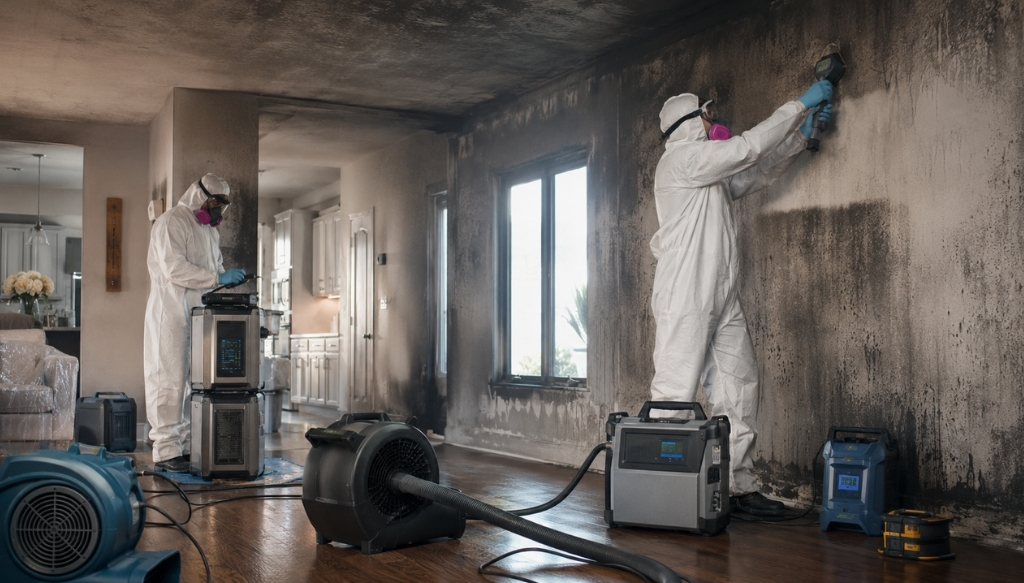
The goal of professional soot removal is not to clean surfaces. It is to neutralize the acidic chemistry that is actively causing damage. That distinction matters because cleaning a surface and stopping corrosion are two different outcomes that require different approaches.
2. How are metals cleaned and protected?
First, surface contamination is cleared, then metals are polished and treated with corrosion inhibitors that stop the chemical reaction instead of just fixing what is visible on the surface currently.
3. What techniques are used for electronics restoration?
To properly restore electronics after smoke damage, professionals use precision cleaning methods calibrated for sensitive components, controlled-drying environments, and, in some cases, full disassembly to reach areas that no surface treatment can address.
Can Kitchen Fixtures and Electronics Be Fully Restored?
1. What factors influence restorability?
Time elapsed, residue type, and material sensitivity are three factors that shape the outcome of a professional assessment.
All three matter, but time tends to be the most decisive of them.
2. When is replacement unavoidable?
When corrosion has reached the structural layer of a metal component, when electronics have failed internally, or when protective coatings have been chemically compromised beyond recovery, replacement becomes the only remaining option.
3. How professionals assess salvageable items
A thorough fire damage restoration assessment includes moisture and contamination readings, physical surface inspections, and functional testing of electronics before any recommendations are made. The goal is an honest picture, not an optimistic one.
What Are the Financial Risks of Delaying Fire Damage Restoration?
1. How quickly do repair costs escalate?
The National Fire Protection Association estimates that annual residential fire property damage in the United States exceeds $8 billion, and delayed response accounts for a significant share of costs that could have been lower.
2. What items are most expensive to replace?
Built-in kitchen appliances, integrated cabinetry, custom countertops, and high-end electronics are consistently among the most expensive line items in any post-fire replacement estimate.
3. How insurance claims are affected by delays
Insurance adjusters look at whether the damage was preventable. When restoration is delayed, and corrosion progresses beyond what it would have with prompt action, claims can be reduced or disputed on exactly those grounds.
What Should You Do Immediately After Fire Damage?
1. What actions should homeowners take first?
First things first, make sure the property is safe to enter. Then avoid touching any soot-covered surfaces and photograph each area with visible damage before it is disturbed.
2. What mistakes can worsen corrosion?
- Waiting even a day or two before calling a professional
- Attempting to wipe down contaminated surfaces without appropriate materials
- Treating what you can see as the full extent of the damage
3. Why is a professional assessment essential?
A trained restoration team sees what homeowners typically miss: fire damage behind panels, inside ductwork, and under intact coatings. That assessment is what makes the difference between addressing the real problem and addressing only its surface.
Quick Response Checklist
- Verify structural safety before re-entering the property
- Keep affected electronics powered off and untouched
- Do not wipe, sweep, or vacuum soot-covered surfaces
- Call a certified restoration professional as soon as possible
- Document all visible damage thoroughly for your insurance claim
The Takeaway: Time Protects What Fire Leaves Behind
The 48 hours after a fire are not a grace period. They are the active window in which corrosion sets, spreads, and determines what can still be saved. For anyone dealing with fire damage restoration in Seattle, Bellevue, Everett, Renton, or Bellingham, WA, the decision to act quickly is not a precaution. It is the most financially and practically important choice in the entire recovery process. Bio Clean, Inc. is equipped to help you make the most of that window.
We have built our reputation across Washington on showing up fast, assessing thoroughly, and treating every property with the kind of care that actually shows in the results. When you call us, you are not getting a crew running through a checklist. You are getting people who understand what is at stake and know exactly what to do about it.
Reach out to our team at (888) 412-6300 and start the restoration process before more time passes.