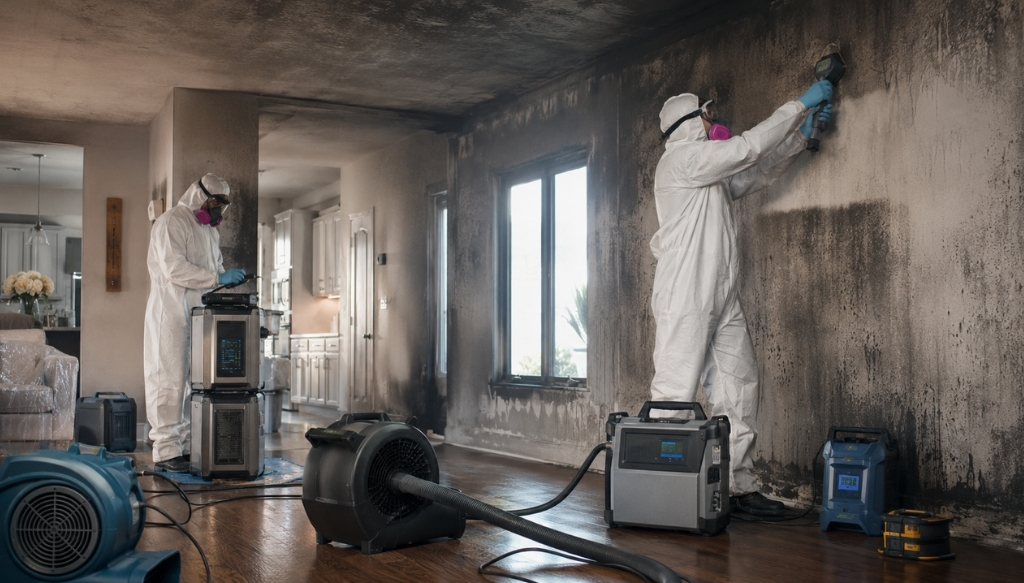
A fire never really ends when the flames go out. Smoke keeps working its way into walls, carpets, and belongings long after the danger has passed, which is why fire and smoke damage is usually a bigger job than it first looks. At Bio Clean, Inc., our smoke damage restoration process runs on certified technicians and equipment built for this exact kind of contamination, because real recovery means treating what you can’t see.
What Smoke Damage Actually Involves
Soot on the wall is only the part you notice first.
- Airborne smoke particles travel through ductwork and settle inside wall cavities, far from where the fire burned.
- Porous stuff like drywall and upholstery soaks up soot, while metal fixtures corrode or discolor.
- Lingering smoke odors occur because smoke chemically bonds with surfaces rather than resting on top of them.
Why Standard Cleaning Falls Short
Household cleaners were never built for this level of damage. Wiping down visible soot leaves deeper residue untouched, so problems resurface, and scrubbing the wrong way can spread contamination into rooms the fire never reached. A smoke-damaged property usually needs more than one pass, since odor and residue behave differently by material.
This gap is why professional smoke damage cleanup exists. Proper smoke residue removal requires trained hands and a defined process; skipping steps usually means having to redo it later.
The Specialized Tools Behind Every Restoration
Our team draws on a full set of smoke restoration tools, selected based on each property’s specific needs.
- HEPA air scrubbers capture microscopic particles before they resettle on cleaned surfaces, so they run for the full duration of a job.
- HEPA vacuum systems trap fine soot rather than recirculating it, making them essential for carpets and upholstery.
- Ozone generators break down odor molecules at a chemical level. We use ozone generators mainly in unoccupied spaces.
- Hydroxyl generators operate without the evacuation required by ozone, so they suit occupied homes better.
- Ultrasonic cleaning equipment lifts soot from delicate items and often saves belongings that would otherwise be discarded.
- Thermal fogging equipment carries deodorizers into the tiny spaces that smoke reached, usually as the final step after it has done its work.
Detection and Filtration Working Together
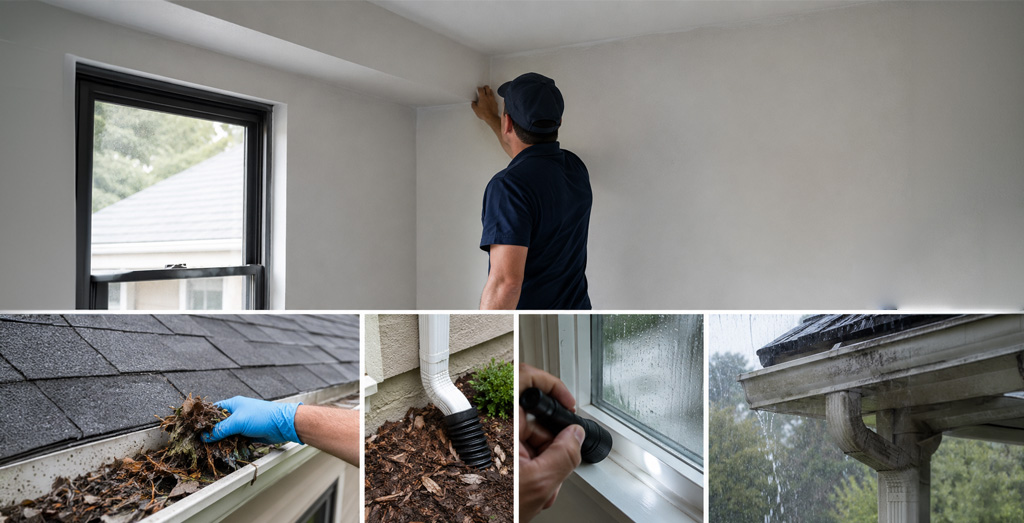
Before that equipment gets used, technicians need to know what they’re dealing with. Moisture meters catch hidden dampness, and thermal imaging cameras expose damage behind walls. Air filtration systems then run continuously through the job, pulling airborne smoke particles from the air and stopping cross-contamination between rooms. Without proper air filtration systems, cleaned rooms pick up new contamination from spaces still being treated, and this step drives real indoor air quality restoration as much as surface cleaning does. Households with young children or anyone sensitive to smoke exposure benefit most from thorough indoor air quality restoration.
Real Smoke Odor Removal, Not Odor Masking
Heat opens the pores of wood and drywall, letting lingering smoke odors settle in deep instead of sitting on the surface. Carpet and insulation trap those lingering smoke odors long after soot has been wiped away, which is why air fresheners only mask the problem. True smoke odor removal neutralizes the source rather than covering it up, and that distinction is why smoke remediation services exist. Smoke odor removal done properly stays gone, not just fresh for a day.
Preventing Secondary Damage
Untreated soot contamination doesn’t just linger. It creates new problems.
- If moisture and residue stick around too long, wood framing and drywall just keep breaking down.
- Smoke residue is acidic and can corrode metal fixtures, appliances, and wiring.
- Materials exposed to unresolved soot contamination break down faster the longer they sit.
This is where fire damage restoration and smoke cleanup overlap most, since fire and smoke damage rarely stay separate problems. The right smoke restoration tools, used early, protect the structure before secondary damage sets in.
Not Every Fire Leaves the Same Residue
Restoration has to match the fire type, because soot removal services that work on one kind of residue can fail on another.
| Fire Type | What It Leaves Behind |
| Protein Fire Residue | Nearly invisible film with a stubborn odor |
| Wet Smoke Damage | Thick, sticky residue from smoldering fires |
| Dry Smoke Damage | Powdery residue from fast, high-heat fires |
| Fuel Oil Soot | Oily buildup, often from furnace issues |
| Wildfire Smoke Damage | Fine particulate that seeps in through vents |
| Electrical Fire Residue | Concentrated soot with a chemical smell |
Wildfire smoke damage deserves its own mention, since Washington summers regularly bring smoke drifting into homes, even when the fire itself burns miles away. Effective smoke contamination cleanup accounts for exactly this kind of case.
Signs You Need Professional Help
- Smoke odors that return even after airing the space out
- Visible soot on walls, ceilings, or furniture
- New discoloration that wasn’t there before the fire
- Respiratory irritation indoors
- A smoky smell coming from HVAC vents
- Residue lingering on fabrics, electronics, or belongings
If any of this sounds familiar, waiting rarely helps. It’s time to bring in soot removal services and smoke remediation services instead of trying another round of DIY cleaning.
Why the Right Team Changes the Outcome
Bring in the right pros with the right equipment, and you’ll get faster timelines and cleaner soot removal. Full fire damage restoration also helps save more belongings and materials rather than losing them, and a smoke-damaged property has a real shot at feeling normal again. Our team documents every step of the smoke contamination cleanup process, which makes the insurance side considerably less stressful.
Bio Clean, Inc. Is Ready When You Need Us
Fire never waits for a convenient time, and neither do we. Our locally owned team handles smoke damage restoration in Seattle, WA, and smoke damage restoration in Bellevue, WA, that families call after a kitchen fire, along with smoke damage restoration in Everett, WA, smoke damage restoration in Renton, WA, and smoke damage restoration in Bellingham, WA, across the rest of our Washington service area.
Every property gets the same certified technicians and specialized equipment, whether you’re comparing smoke damage restoration Seattle, WA or smoke damage restoration Bellevue, WA options, or you need smoke damage restoration Everett, WA, smoke damage restoration Renton, WA, or smoke damage restoration Bellingham, WA closer to home.
Contact Bio Clean, Inc. today to schedule an assessment and start restoring your property with a team that treats it like it matters.