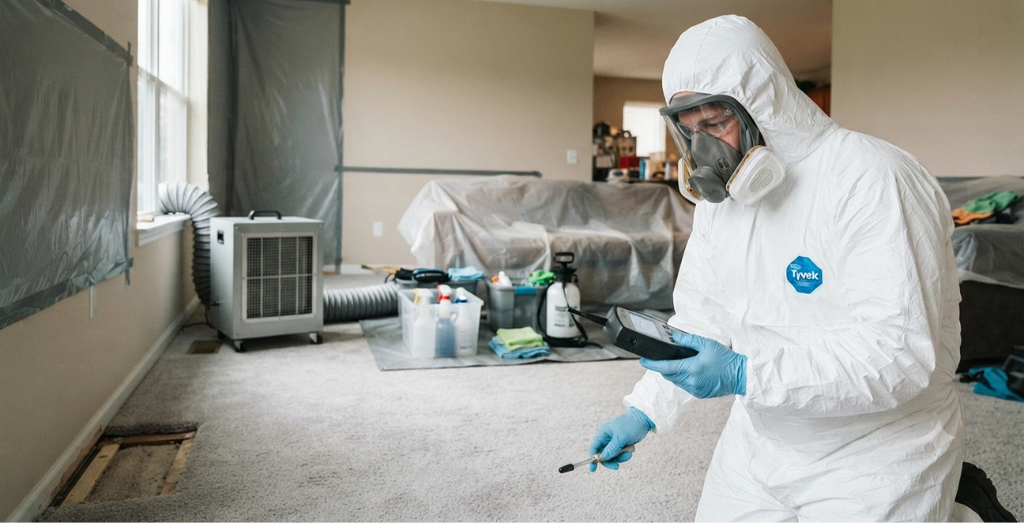
A plumbing leak, a storm, or a failed appliance can all end the same way: with a floor that looks dry while water still sits beneath it. Bio Clean, Inc. is a family-owned and operated company based in Marysville, and we work in homes and businesses across Snohomish, King, Pierce, and Whatcom counties. In this blog, we explain how subfloor cavity airflow affects water damage restoration and how one can protect your property.
What Is Subfloor Cavity Airflow?
1. Understanding The Space Beneath Your Flooring
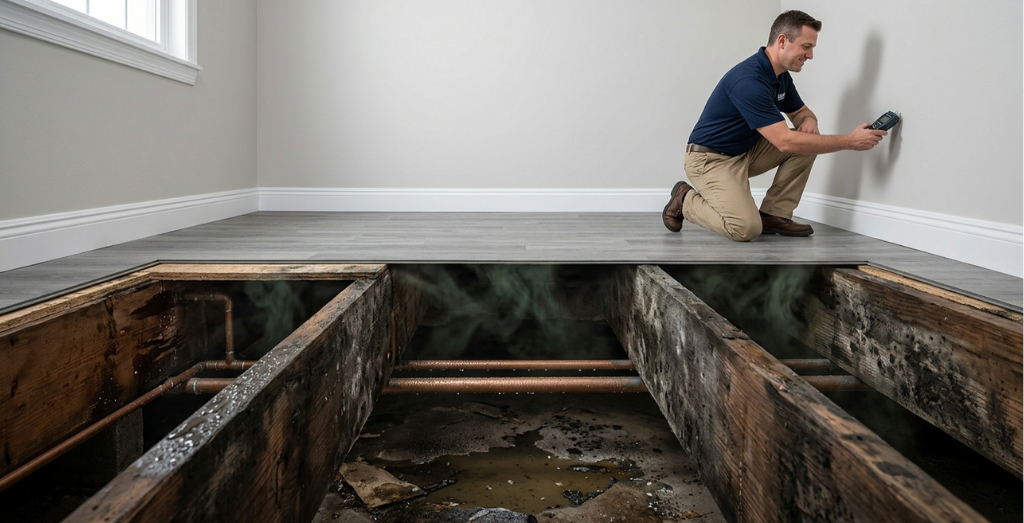
Under your finished flooring is the subfloor, supported by floor joists. The open area between those joists is the floor cavity, and it usually holds insulation and vapor barriers. Both soak up water when a leak or flood gets that far. Because you rarely see this space, hidden water damage can go unnoticed until a musty smell or a warped board points to it.
2. Why Airflow Matters During Structural Drying
Wet wood and insulation dry only when moving air carries moisture away. Subfloor cavity airflow means dry air moves through those closed-in spaces so the water has somewhere to go. If the air sits still, the moisture stays put, so structural drying services have to reach the walls, floors, and other structural components as well.
Why Hidden Moisture Is More Dangerous Than Surface Water
1. Moisture Trapped Beneath Flooring Materials
After we control the source, industrial-grade wet/dry vacuums and pumps quickly remove standing water. But they cannot pull out water that has already soaked into wet subfloor insulation and surrounding wood. Floor cavity moisture can linger well after the puddles are gone.
2. Why Surface Drying Is Not Enough
Drying only what you can see leaves the structure wet underneath. This is how hardwood floor water damage happens: boards can feel dry to the touch while the material below still holds water. Proper subfloor drying goes deeper, because moisture has to leave every structural component.
The Hidden Risks of Poor Subfloor Airflow
1. Mold Growth Inside Floor Cavities
According to FEMA, mold can start forming on a damp surface within a day or two. A wet cavity with no airflow is ideal for it. Mold prevention after flooding starts with drying the whole structure and running dehumidification. If mold has already set in, our team removes it. We then apply antimicrobial treatments to help keep it from coming back.
2. Structural Wood Deterioration
Wood that stays wet loses strength over time. Moisture in floor joists can cause warping and weaken the framing under your floor.
3. Flooring Failure and Costly Replacements
When the cavity stays wet, the flooring above is usually the first place it shows. You may see:
- Wooden floors that warp
- Insulation that has taken on water and has to be replaced
- Soaked drywall near the floor line
Depending on the damage, we may dry, sand, or replace the flooring.
How Professionals Restore Proper Subfloor Airflow
Our work follows the full water damage drying process, from water removal to drying and repair. IICRC structural drying guidance is the industry reference point for this work, and it treats moisture, humidity, and airflow as parts of the same problem.
1. Moisture Mapping and Inspection
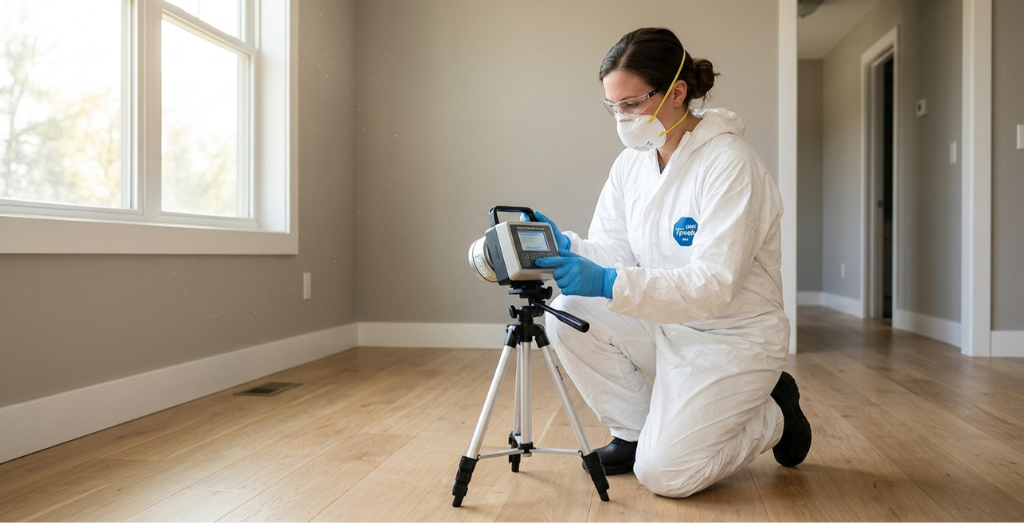
We start by locating where the water came from and how far it has traveled, including basements, kitchens, and bathrooms. Moisture mapping and a moisture meter inspection are the standard ways to record that path.
2. Specialized Drying Equipment
Air movers and other drying equipment blow air across wet materials, and dehumidifiers pull the moisture back out of that air. Together they make up the dehumidification process, which keeps water from settling back in. Psychrometric drying, meaning drying guided by air temperature and humidity readings, tells the crew where each machine should go. If a crawl space sits under the building, crawl space drying and underfloor moisture removal address the lowest part of the structure.
3. Monitoring The Drying Process
We keep drying until every affected area tests dry, and psychrometric drying readings show how close we are. Relative humidity control keeps indoor environmental conditions from inviting mold back in. Only then do we inspect the structure, replace what cannot be saved, and start water damage repair.
Think water may be sitting under your floors? Call Bio Clean, Inc. today, and we will take a look.
Signs Your Subfloor May Still Be Holding Moisture
Look for these after any leak or flood:
- Wooden floors that warp or cup
- A musty smell that keeps coming back after cleaning
- Spots that feel soft underfoot, which can point to floor cavity moisture or floor joist moisture
- Mold showing along baseboards or walls
Any of these is reason enough to book a moisture meter inspection.
Residential vs. Commercial Water Damage Challenges
Homes and businesses face different priorities.
| Property Type | Typical Challenge | Our Response |
| Homes | Hardwood floor water damage, insulation, and damage in basements and bathrooms | Extraction, drying, dehumidification, and repair |
| Commercial properties | Business disruption and large affected areas | Rapid response and round-the-clock availability |
How Ignoring Subfloor Airflow Increases Restoration Costs
When drying stops early, a manageable loss grows into a bigger project.
Secondary Damage and Repeat Repairs
If moisture remains from the initial water damage, it can become secondary water damage. It can lead to:
- Growth of mould that requires removal.
- Building materials that begin to decay
- Repeat trips to clean up more dry and water damage repairs.
When you dry thoroughly, you prevent any water damage from getting to other areas of your home, and our team works with your insurance company so you don’t have to.
Best Practices for Preventing Long-Term Subfloor Damage
- Stop the water at its source right away, whether that means shutting off the main supply or repairing a burst pipe.
- Call for emergency water damage restoration the moment water gets in
- Ask for moisture mapping and complete subfloor drying rather than a quick surface check
- Ask whether the water damage drying process follows IICRC structural drying guidance
- Have wet subfloor insulation assessed and replaced where needed, and have vapor barriers checked
- Confirm that air movers and drying equipment are matched to the size of the space
- Treat mold prevention after flooding as urgent
- Arrange crawl space drying and underfloor moisture removal once water reaches the lower area.
- Monitor relative humidity control and indoor environmental conditions after any water event.
Our team is available around the clock for emergency water damage restoration.
Proper Equipment Is Essential for Effective Drug House Decontamination
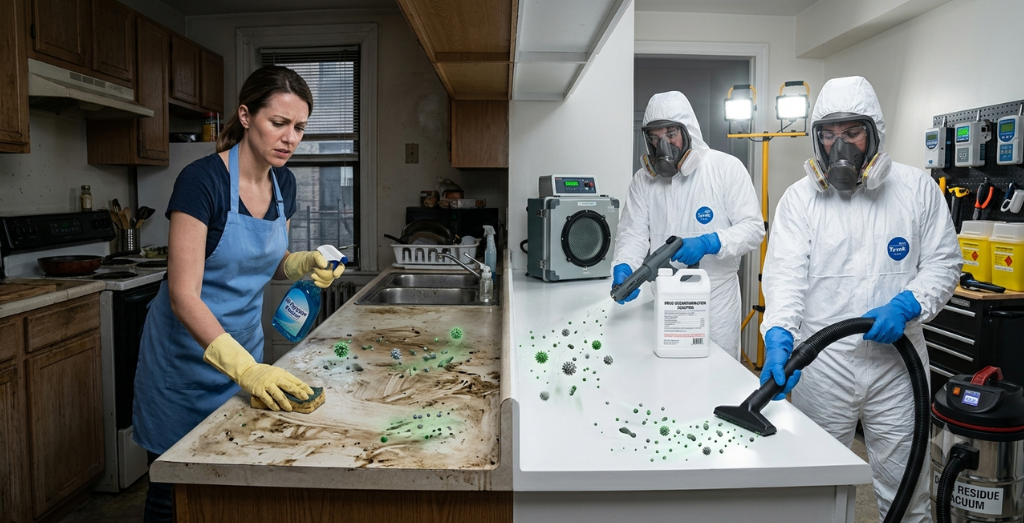
The same attention to equipment applies to our drug remediation work, where we detect and remove hazardous residues such as methamphetamine and fentanyl from homes, vehicles, multi-family housing, and commercial spaces. Each job follows a set process:
- Certified sampling and lab analysis to pinpoint how contaminated the property is
- A remediation plan built around your property
- Thorough decontamination and safe disposal of affected materials
- Clearance testing to confirm the property is compliant, healthy, and safe to live in
Let Bio Clean, Inc. Dry What You Cannot See
Hidden water damage doesn’t go away on its own. Our compassionate, locally owned team handles extraction, structural drying, dehumidification, and repair with care and discretion.
Ready to get started? Call Bio Clean, Inc. today and let our team make your property safe again.