- [email protected]
- 4801 56th PL NE Suite A Marysville, WA 98270
When water gets into a building, the clock starts immediately. Bio Clean is a water mitigation company providing water damage restoration in Seattle, WA, for homes and businesses throughout the region. Our water removal specialists handle the entire job: water extraction, structural drying, sanitation, and complete structural repair. From Beacon Hill to South Lake Union, we respond at any hour.
(888) 412-6300




If you need help or have questions about our services, please don’t hesitate to let us know. You can contact Bio Clean, Inc. at (888) 412-6300 or email us at [email protected]. Our dedicated team is ready to provide the information you need and guide you through scheduling a cleanup.
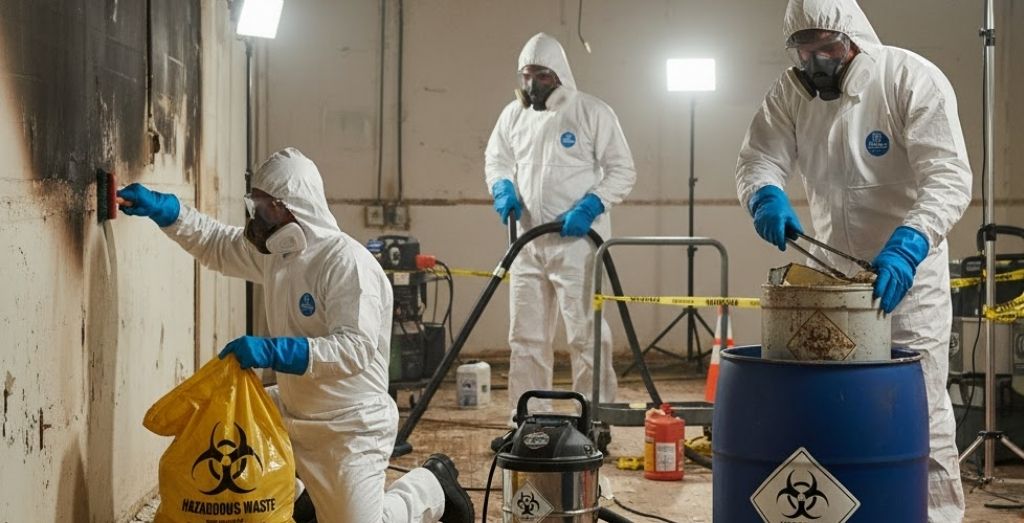
Seattle averages more than 150 rainy days per year. That persistent climate creates sustained indoor humidity issues that slow structural drying after any water loss. When water enters through a pipe failure, roof breach, or blocked drain, it travels through wall cavities and beneath flooring before it becomes visible at the surface. Older neighborhoods like Georgetown, Wallingford, and Rainier Valley were built before modern moisture barriers were standard. Without those barriers, water moves deeper into framing faster, and secondary water damage prevention becomes far harder to achieve. A qualified water mitigation company addresses moisture at the structural level, not the cosmetic one.
Water damage rarely announces itself. By the time it is visible, it has usually been moving through building materials for hours. Watch for these signs:
Call Bio Clean for emergency water damage cleanup at the first indication of any of these. Acting early limits what needs to be replaced.
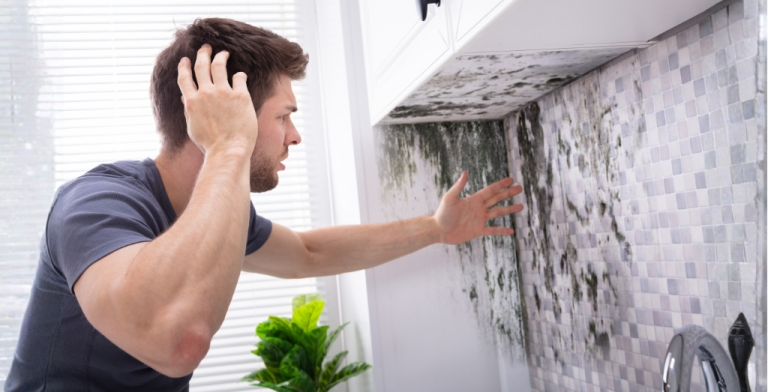
Every job begins with a full property inspection before any equipment is placed. Technicians use thermal imaging moisture detection alongside moisture meters to conduct moisture mapping services that trace water into wall cavities, subfloor assemblies, and structural framing. Hidden moisture removal targets are confirmed here. This step determines what can be dried in place and what needs to come out. It also documents the full scope of damage from day one.
Our water extraction services begin immediately after the inspection is complete. Bio Clean uses truck-mounted and portable extraction units on carpet, hardwood, concrete, and tile. Speed matters here. Seattle's ambient humidity slows natural evaporation considerably, and every hour that standing water remains on a surface is another hour it has to penetrate framing, insulation, and subfloor material. Our water removal specialists run extraction until moisture levels confirm the standing water is gone.
Structural drying services follow immediately after extraction. Commercial air movers and industrial dehumidification equipment are positioned throughout the affected area. The focus is specific: wet drywall drying, subfloor drying, and damp wall restoration in framing cavities. Outdoor ventilation does not work in Seattle's climate. Our technicians record moisture readings each day and reposition equipment to address any area that is not drying at the expected rate.
As per after water damage, any water source that is contaminated is treated with antimicrobial products to stop microbial and mold growth. Graywater and blackwater events require stricter containment and removal protocols. Musty odor removal is applied to subfloor panels, wall cavities, and all absorbent surfaces where water was present long enough to generate odor.
Once final moisture readings confirm the structure is dry, Bio Clean handles repair directly. This covers water-soaked insulation removal, drywall replacement, flooring repair or replacement, and ceiling water-damage repair when overhead material is affected. Both residential water damage repair and commercial water damage restoration are managed under one scope. Property owners work with one company from the first hour through the finished restoration.
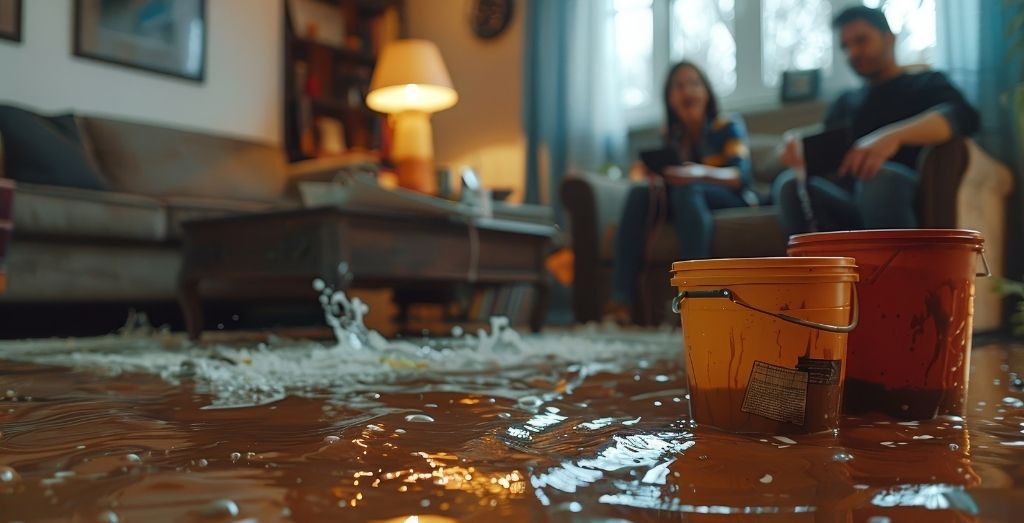
A household fan moves air. It does not remove moisture from building materials. Wood framing, drywall, and subfloor panels retain water well beyond what appears dry on the surface. In Seattle, outdoor air during and after a rain event carries more humidity than indoor air. Opening windows after a water loss introduces more moisture, compounding indoor humidity issues rather than resolving them. Professional moisture control solutions control the drying environment from inside the structure using calibrated equipment. Properties that appear dry on the surface but retain moisture in framing or subfloor are exactly where mold from burst pipes and other sources develops, where floors fail, and where structural wood loses integrity. Our team provides 24/7 water damage restoration, so this does not have time to happen.
Bio Clean has responded to flood-damage restoration jobs across the full range of the city’s building stock, including older craftsman homes, newer construction, and large commercial buildings. Our technicians understand how different framing systems and construction materials hold and release water.
We provide 24/7 water damage restoration and handle emergency flood cleanup at any hour. Faster containment means less material needs replacement and less total restoration time.
Industrial dehumidification units, commercial air movers, and truck-mounted extraction systems are calibrated for Pacific Northwest humidity levels. We do not use residential-grade substitutes on structural drying jobs.
Bio Clean provides daily moisture readings, written scope records, and photographic documentation from the start of every job. Property owners have what adjusters need without having to reconstruct records after the fact.
Bio Clean does not hand the job off after extraction. We manage residential water damage repair and commercial water damage restoration through to finished conditions. One company, one scope, no coordination gaps.
Situation | Common Seattle Cause |
|---|---|
Burst pipe cleanup | Aging supply lines, cold weather pressure spikes, and infrastructure failure |
Appliance overflow | Washing machines, dishwashers, water heaters |
Ceiling water damage repair | Roof leaks, failed flashing, and backed-up gutters during heavy rain |
Sewer and drain backup | Combined sewer overflow is common during high-rainfall periods |
Crawl space flooding | Ground saturation in low-lying neighborhoods throughout Seattle |
Stormwater intrusion | Wind-driven rain and surface water entering through the foundations |
Commercial water losses | Sprinkler activations, HVAC condensation line failures, pipe breaks |
Mold remediation after flooding, structural rot, and poor indoor air quality are the consequences of not fully extracting and drying water. Emergency water damage cleanup is most effective in the first few hours after a loss occurs. Delay lets water travel further into materials, increases the volume that cannot be salvaged, and grows the total scope of repair. Secondary water damage prevention is directly a function of how quickly extraction and drying begin. For any emergency flood cleanup in your Seattle property, call Bio Clean immediately.
Shut off the water source if you can reach it safely. Do not enter areas where electrical panels or outlets may have come into contact with water. Do not run household fans as a substitute for water extraction services. They distribute surface moisture without removing water from building materials. Photograph what you can see, and call Bio Clean for emergency water damage cleanup immediately.
Thermal imaging moisture detection identifies wet areas by the temperature difference caused by evaporation in saturated materials. When combined with moisture mapping services, technicians locate hidden moisture removal targets inside walls, beneath flooring, and within subfloor assemblies without unnecessarily cutting into surfaces.
No. Clean supply water, gray water from appliances, and black water from sewage each require different protocols. Blackwater demands strict containment, procedures to prevent microbial growth, and removal of all saturated porous materials. Bio Clean assesses the water source at the start of each flood-damaging restoration job in Seattle and applies the appropriate protocol.
The subfloor drying process and wet drywall drying typically take several days, depending on material saturation and the affected square footage. Bio Clean records moisture readings daily and shares progress with property owners. Repairs begin after final readings confirm dryness throughout.
Yes. Mold can grow in saturated structural materials within 24-48 hours following the exposure to burst pipes or water sources. After a flood, structural drying, antimicrobial treatment and in some instances even the removal of water saturated insulation is necessary to prevent mold growth or to remediate the mold. Moisture-control solutions such as damp wall restoration work on two fronts: the structural health and the air quality.
(888) 412-6300


If you need help or have questions about our services, please don’t hesitate to let us know. You can contact Bio Clean, Inc. at (888) 412-6300 or email us at [email protected]. Our dedicated team is ready to provide the information you need and guide you through scheduling a cleanup.