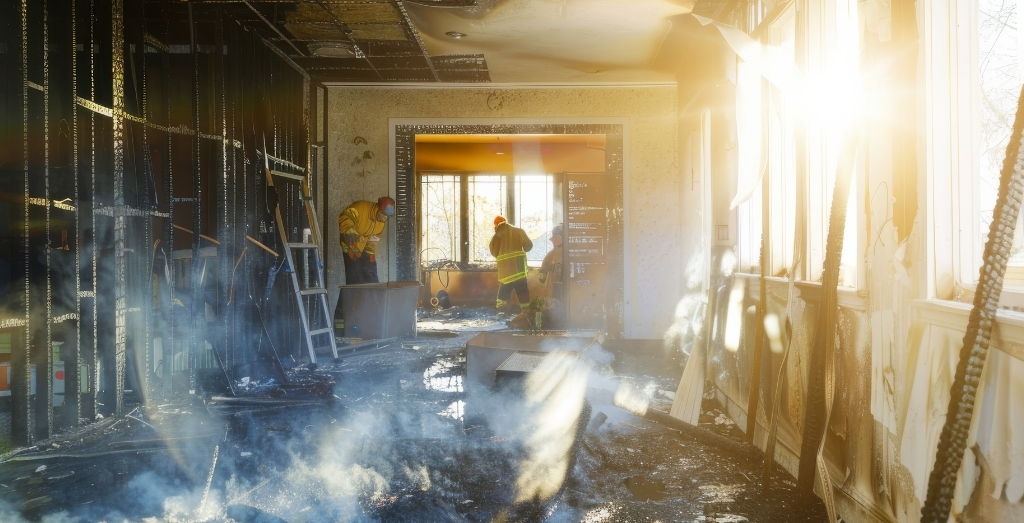
A fire changes a property in minutes, but the damage it leaves behind continues to develop for days. Smoke travels through walls and ductwork. Water from firefighting soaks into subfloors and insulation. Soot begins corroding surfaces before the ash cools. For homeowners across western Washington, where older homes in Bellingham sit alongside newer builds in Renton and Bellevue, the aftermath of a fire is rarely straightforward. It is layered, and it demands a structured response.
This blog walks through the complete fire damage restoration process in Bellevue, WA, so property owners know what to expect at each stage.
What Does Total Fire Damage Restoration Actually Cover?
“Total” fire damage means the destruction has spread beyond the point of ignition and has reached multiple systems of the property. A kitchen fire becomes total damage when smoke enters the HVAC, water from suppression soaks the subfloor, and soot settles in rooms that never saw a flame.
The total fire damage restoration process in Bellingham, WA, addresses all aspects of it. The damage types typically involved include:
- Structural: Burned framing, weakened load-bearing walls, collapsed ceilings
- Smoke and Soot: Residue on all surfaces, inside cabinets, and throughout ductwork
- Water Intrusion: From fire hoses, sprinklers, or pipes that burst during the fire
- Air Quality: Toxic particles embedded in insulation, carpet, and soft furnishings
- Contents: Furniture, electronics, documents, and personal belongings
The Initial Assessment Sets the Entire Restoration Plan
Before any fire-damage cleanup begins, Bio Clean conducts a full walkthrough of the property. This is not a quick visual scan. Technicians identify which structural elements are compromised, how far smoke has traveled through the building, whether the HVAC carried contamination into unaffected zones, and where water has penetrated walls or flooring. Every surface and system is photographed and logged.
Why This Documentation Directly Affects Your Insurance Claim
The fire damage insurance claims process runs on evidence. Insurers require an itemized, organized record of damage before they approve repairs or replacements. A professional scope-of-loss report from Bio Clean gives adjusters exactly what they need, reducing back-and-forth and avoiding unnecessary delays in getting work approved and started.
Securing the Property Is Step One, Not an Afterthought
Once the fire department clears the scene, the property is open to rain, pests, and unauthorized entry. Broken windows, warped doors, and structural gaps are an immediate problem, especially across western Washington, where precipitation is consistent through fall and winter in cities like Bellingham, Everett, and Seattle.
Bio Clean’s emergency board-up service seals those openings before additional damage occurs. Skipping or delaying this step means salvageable materials get wet, mold conditions develop more quickly, and the fire restoration timeline extends considerably.
Smoke, Soot, and Odor Removal Requires More Than Surface Cleaning
This is where DIY attempts consistently fall short. Soot varies depending on what is burned. Protein fires leave a near-invisible but intensely pungent residue. Wood fires produce dry, powdery ash. Synthetic materials burn into oily, sticky soot that smears and stains if cleaned improperly.
How Bio Clean Removes Smoke Odor Permanently
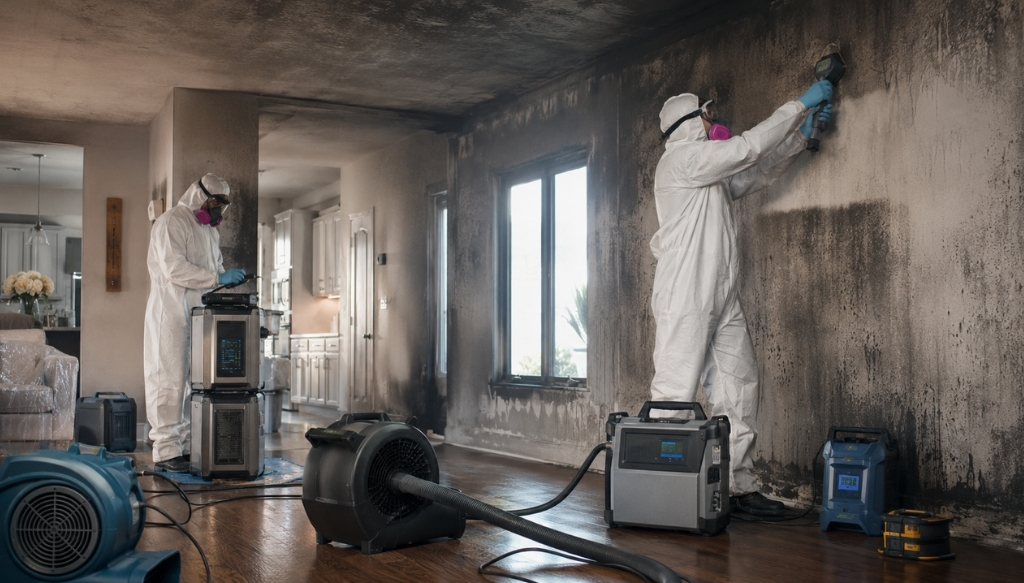
Smoke odor molecules penetrate drywall, wood framing, insulation, and fabric. Surface wiping does not reach them. Bio Clean uses:
- Thermal fogging to neutralize odor in porous materials
- Hydroxyl generators and ozone treatments for deep penetration
- Air scrubbers running under negative pressure to pull contaminated air out of the space
HVAC systems also require dedicated cleaning. If smoke entered the ductwork during the fire, the system will continue to recirculate contaminated air each time it runs. In tightly built homes across Bellevue and Renton, this is a real indoor air quality concern that cannot be skipped.
Water Damage After a Fire Is Just as Serious as the Fire Itself
Water from firefighting efforts saturates building materials quickly. Drywall begins breaking down within hours. Hardwood floors buckle. Subfloors reach mold-ready moisture levels within 24 to 72 hours. In Everett and Seattle, where outdoor humidity already runs high through the colder months, waterlogged materials dry slowly without professional intervention.
What Professional Drying Involves
Bio Clean uses industrial dehumidifiers, high-velocity air movers, and desiccant drying systems to systematically remove moisture from the structure. Moisture meters track progress inside walls and under floors to confirm that materials reach safe levels before any rebuilding begins. Because Bio Clean handles both water damage restoration and mold remediation, the same team identifies the problem and follows it through to resolution.
Contents, Reconstruction, and the Claims Process
Salvaging Personal Belongings
Hard surfaces, including metal, glass, and sealed wood, can often be cleaned and restored. Textiles, documents, and electronics are assessed individually. Every item is inventoried with condition records before and after treatment, which feeds directly into the insurance claim.
What the Reconstruction Phase Covers
Once the property is stabilized and dried, rebuilding addresses structural repairs, drywall and insulation replacement, flooring, mechanical systems, and any exterior work that followed the emergency board-up phase. When fire compromises load-bearing elements, Bio Clean’s heavy equipment and demolition services handle the larger-scale work.
What Homeowners Should Avoid After a Fire
- Do not use standard household cleaners on soot. They set stains permanently.
- Do not run the HVAC system if smoke has entered the ductwork.
- Do not discard damaged belongings before an adjuster has documented them.
- Do not re-enter the property before it is cleared as structurally safe.
Bio Clean Handles the Full Scope Across Washington
Attempting fire damage cleanup without professional training typically spreads soot further, misses hidden moisture, and leaves structural issues undetected. Insurance adjusters may also challenge claims where improper cleanup has altered the evidence of damage.
Bio Clean provides fire damage restoration in Bellingham, WA; Bellevue, WA; Renton, WA; Everett, WA; and Seattle, WA.
From the initial walkthrough to the completion of fire damage recovery, the team manages every stage so property owners do not have to coordinate multiple contractors while navigating an already difficult situation.
Reach out to Bio Clean today for an immediate assessment and hands-on support through the entire fire damage restoration process.