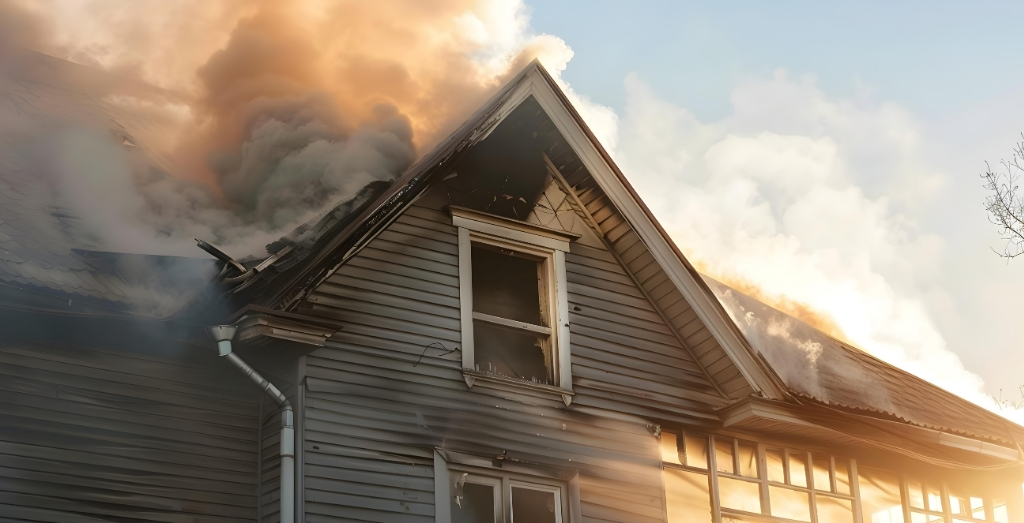
When a fire is extinguished, most homeowners assume the worst is over. It is not. Smoke particles begin settling into walls, ceilings, furniture, and ductwork within minutes, and what stays behind is far more dangerous than the smell alone. Across Washington state, where homes in Seattle, Bellevue, Bellingham, Renton, and Everett are insulated tightly against long, wet winters, that trapped contamination has nowhere to go.
Understanding why smoke damage is a molecular problem, not just a surface one, is the first step toward smoke damage restoration in Everett, WA, and protecting your home and the people in it.
What Happens to Indoor Air Quality After Smoke Damage?
1. What Smoke Particles Are Actually Made Of
Smoke is not a single substance. It is a chemical mixture of gases and ultra-fine particles released as different materials burn. Depending on what caught fire, the residue left behind can contain formaldehyde, benzene, carbon monoxide, and polycyclic aromatic hydrocarbons. Many of these compounds are classified as toxic, and none of them disappear when the flames go out.
2. How Smoke Spreads Through A Home
Smoke behaves like a gas. It travels through every gap, vent, and opening in a structure within minutes of a fire starting. The heat from flames creates pressure shifts that actively pull smoke into rooms that never saw fire. By the time a fire is out, particles have already deposited on surfaces throughout the entire home, not just in the room where the fire occurred.
3. Why Odors Return Weeks Later
Smoke compounds bond chemically with porous materials like drywall, wood, insulation, and fabric. The odor that returns weeks after a fire is the home’s off-gassing of those absorbed compounds back into the air. This is also why indoor air quality from smoke damage restoration in Bellingham, WA, cannot be resolved with consumer products. The problem is not on the surface. It is inside the material itself.
4. Why Regular Cleaning Methods Fall Short
Fine smoke particles, known as PM2.5, are smaller than a human hair. They pass through standard filters, stay suspended in the air for hours, and penetrate deeply into building materials. Surface cleaning addresses only what is visible, which is a small fraction of the actual contamination.
Here is where smoke typically penetrates in a home and how difficult each area is to address:
| Surface | Penetration | Difficulty |
| Drywall | Deep into the paper layer | High |
| Wood framing | Deep into the grain | High |
| Upholstered furniture | Into foam core | Very High |
| Carpets and rugs | Medium to deep | High |
| HVAC ductwork | Surface to moderate | High |
Using the wrong cleaning agent on soot can push residue deeper into the substrate. Running a standard vacuum over smoke-affected carpet without a HEPA filter sends fine particles back into the air. DIY cleanup does not eliminate the problem. In many cases, it spreads.
The Health Risks of Smoke-Damaged Indoor Air
The health risks of smoke particles do not stop when the fire does. Off-gassing continues long after the odor fades, meaning occupants are still being exposed even in a home that seems clean. The groups most at risk include:
- Children, whose developing lungs are far more vulnerable to chemical irritants
- Elderly residents, particularly those managing asthma, COPD, or cardiovascular conditions
- Anyone with existing respiratory conditions, since smoke residue is a powerful airway trigger
Prolonged exposure to unrestored smoke contamination can cause chronic respiratory inflammation, aggravate existing conditions, and introduce ongoing exposure to compounds that are known carcinogens. This is a health issue, not just a comfort issue, and it does not resolve itself.
How Bio Clean Removes Smoke at the Molecular Level
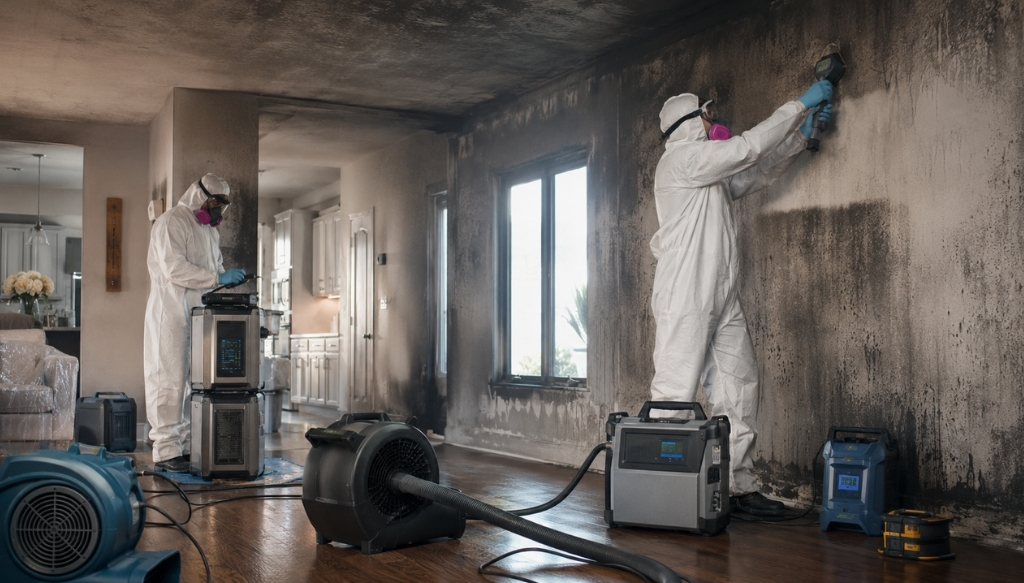
The professional smoke damage restoration process works because it targets contamination at the source rather than just the surface. Bio Clean uses a combination of proven techniques to restore genuine indoor air quality after fire damage.
1. Thermal Fogging
Thermal fogging converts a deodorizing agent into a fine mist that physically penetrates the same porous materials that smoke entered. It neutralizes odor compounds from the inside out, which is why it is one of the few methods that can permanently remove smoke odor rather than just mask it.
2. HEPA Air Scrubbers
Industrial HEPA air scrubbers capture particles as small as 0.3 microns, covering the full range of fine particulate matter that remains after a fire. Running these machines throughout the restoration process continuously improves indoor air quality. No consumer air purifier operates at this level of filtration or volume.
3. Ozone and Hydroxyl Treatment
These treatments break down odor-causing molecules through oxidation rather than masking them. Ozone treatment is used in unoccupied spaces. Hydroxyl generators can operate safely around people and materials. Both reach embedded compounds inside walls and furnishings, making them essential tools for any thorough fire-damage air-quality restoration.
The Areas Most Homeowners Overlook
Smoke does not respect room boundaries. These are the areas that accumulate contamination in ways most homeowners do not expect:
- HVAC systems pull smoke through return vents and deposit soot across ductwork, contaminating rooms far from the fire source every time the system runs
- Soft furnishings, including mattresses, sofas, curtains, and rugs absorb smoke compounds deeply and release them steadily as they warm up with indoor heating
- Structural materials like wood framing and subflooring absorb smoke the same way fabric does, and no surface product reaches contamination at that depth.
In Seattle and Bellingham, where heating runs for most of the year, these materials continue to release smoke compounds into the air until the underlying contamination is properly addressed.
Why Acting Fast Protects Your Home and Your Budget
Soot is acidic. Within the first day or two after a fire, it begins to corrode metal fixtures, etch glass, and stain finished wood. The longer it sits, the deeper it bonds. Washington’s humidity significantly accelerates this process. Homeowners who delay smoke damage restoration in Renton, WA, or put off calling for help after a fire in Everett, WA, consistently find that the scope of work grows with each passing day.
Getting professional smoke cleanup services on-site quickly is not just about odor. It limits permanent material damage and reduces what ultimately needs to be replaced.
What Professional Restoration Delivers That DIY Cannot
Thorough smoke damage restoration in Bellevue, WA, and smoke damage restoration in Seattle, WA, does three things that no amount of consumer cleaning can achieve:
- Genuine air quality restoration, with contamination addressed at every level from surface residue to HVAC deposits to structural materials
- Odor elimination that does not return when seasons change, or when the heating comes on, because the source compounds are neutralized rather than covered
- Documented, verifiable work that holds up during insurance claims, future inspections, and property sales
Bio Clean Is Ready When You Need It
Smoke damage does not wait, and neither should you. Bio Clean provides smoke damage restoration in Seattle, WA, smoke damage restoration in Bellingham, WA, smoke damage restoration in Renton, WA, smoke damage restoration in Bellevue, WA, and smoke damage restoration in Everett, WA, along with dozens of communities across Washington state.
If your home has been affected by fire and smoke, contact Bio Clean for a professional assessment and let the team restore what the smoke left behind.