
Washington does not give property owners much margin when it comes to water damage. The Pacific Northwest’s wet season runs long, and cities like Seattle, Everett, Bellevue, and Bellingham sit in some of the most moisture-saturated regions in the country. A single plumbing failure or roof breach during a November storm can push water into walls, subfloors, and crawlspaces faster than most people expect.
What many homeowners do not realize is that the 2026 health code updates have set a firm standard: professional drying must begin within 24 hours of a water intrusion event. Miss that window, and you are not just dealing with soggy drywall. You are looking at mold, structural damage, and building safety compliance issues that are far more costly to fix.
The Race Against Time After Water Damage
Water does not stay where you can see it. Within the first hour of a leak or flood, moisture wicks into drywall, saturates insulation inside closed wall cavities, and travels laterally through flooring assemblies. By the time a surface feels dry to the touch, the material behind it may have been holding moisture for hours. The updated professional drying standards for 2026 recognize that moisture control protocols must begin immediately, not after the homeowner has had time to shop around or wait for a convenient appointment. Under current health standards, acting within 24 hours is a legal obligation for occupied structures.
Dealing With Water Damage In Seattle, Everett, Bellevue, or Bellingham?
Call Bio Clean, Inc. at (888) 412-6300. We respond 24/7.
What Happens in the First 24 Hours After Water Damage
1. Immediate Effects
The physical damage water causes in the first few hours is easy to underestimate. Here is what is happening inside your property from the moment moisture enters:
- Drywall begins absorbing moisture within minutes, and its gypsum core starts to soften
- Subfloor panels swell and separate at the seams before surface flooring shows any visible change
- Wood framing takes on water and warps as it dries unevenly across the grain
- Insulation inside wall cavities saturates completely, losing its function as a thermal barrier
None of this is visible from inside the room. A professional moisture assessment using calibrated meters and thermal imaging is the only reliable way to know how far the water has traveled.
2. The Start of Microbial Growth
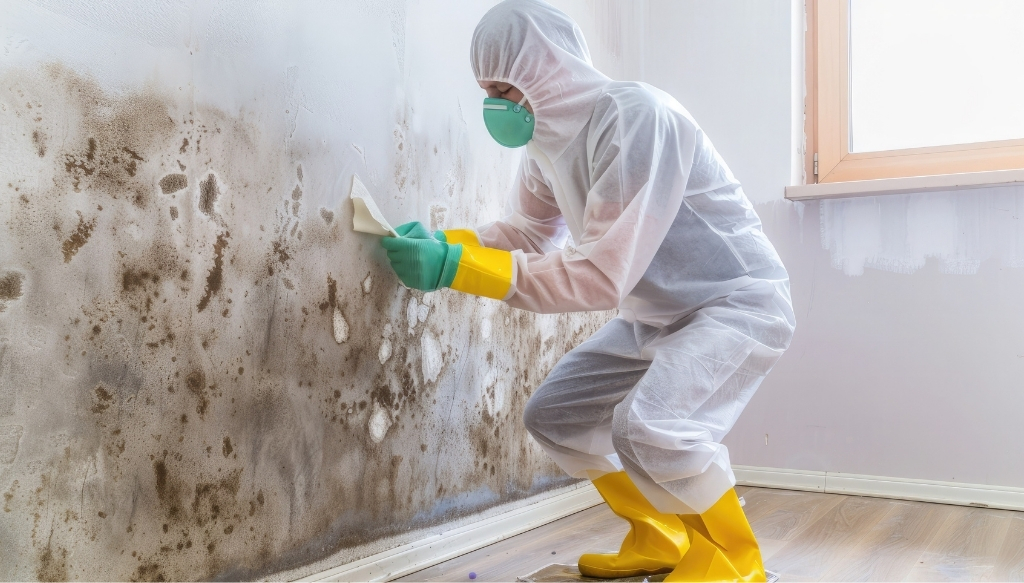
Mold spores exist in virtually every indoor environment, dormant until they find a surface, warmth, and moisture. Water damage provides all three at once. According to FEMA, mold can begin forming on a damp surface within 24 to 48 hours of exposure. In Washington’s climate, particularly along the Snohomish County coast and across Whatcom County, that timeline compresses even further. The moment saturation begins within your walls, microbial growth is already underway.
Why 24 Hours Is the Critical Window
1. Mold Growth Timeline
| Time After Water Exposure | What Is Happening |
| 0 to 4 hours | Water spreads into wall cavities, drywall, and subfloor layers |
| 4 to 12 hours | Odor develops; wood framing and furniture begin to swell |
| 12 to 24 hours | Mold spore activation begins on saturated organic surfaces |
| 24 to 48 hours | Visible mold colonies can form; structural weakening accelerates |
| 48 to 72 hours | Airborne spore levels rise to health-risk territory; remediation scope expands significantly. |
2. Structural Damage Risks
The Seattle neighborhoods, such as Crown Hill and Fremont, and the commercial buildings on the Everett waterfront were constructed without modern vapor barriers. Moisture in such buildings will lead to warping of wood framing, corrosion of metal fasteners, and loss of adhesion of drywall paper and its gypsum core. Moisture trapped in the concrete blocks of older masonry structures in Bellingham can take weeks to dry out after the visible flooding stops, leaving interior surfaces vulnerable to further mold growth.
Understanding the 2026 Health Standards
1. Why Regulations Are Becoming Stricter
The last 10 years of research have associated chronic mold exposure with respiratory disease, chronic sinus infection, and an increasing number of asthmatics. The Washington Department of Health has responded by modifying the mold prevention guidelines, with particular attention to rental properties and occupied commercial spaces. The new 2026 health code adds enforcement mass: unsuccessful inspections, insurance claim issues, and consequences of future tenant liabilities are all justified as real outcomes for property owners who do not want to remediate the property.
Key Requirements Under the 2026 Framework
- Professional drying must begin within 24 hours of a documented water intrusion event.
- Moisture readings must be taken and logged before and after drying to verify materials have returned to a safe level.
- Saturated materials like drywall and insulation that remain wet for more than 24 hours may require full removal.
- Indoor air quality standards must be documented before a space is cleared for reoccupancy
- Moisture control protocols must continue throughout the drying process, not only after standing water is removed.
2. The Health Risks of Delayed Drying
Short-Term Effects
- Coughing, nasal congestion, and throat irritation in otherwise healthy adults
- Rapid onset of symptoms in children, elderly residents, and anyone with asthma
- Bacterial exposure when flooding involves any sewage-connected water source
3. Long-Term Health Concerns
Chronic exposure to elevated mold levels is linked to ongoing respiratory inflammation and, in some cases, to neurological symptoms associated with mycotoxin exposure. Washington’s habitability statutes now explicitly reference indoor air quality standards as a condition of occupancy. Landlords who fail to meet the 24-hour drying requirement face legal exposure and remediation costs.
Why DIY Drying Often Falls Short
1. Household Tools vs. Professional Equipment
A box fan and a residential dehumidifier cannot extract moisture from inside a wall cavity, beneath a glued-down flooring assembly, or within blown-in insulation. Professional quick-dry solutions use high-velocity air movers calibrated to a building’s specific layout, paired with commercial-grade desiccant dehumidifiers that remove moisture at a rate no household unit can match. The 24-hour drying requirement mandates professional drying standards precisely because moisture in building assemblies requires equipment operating at a different capacity.
2. Hidden Moisture: The Problem You Cannot See
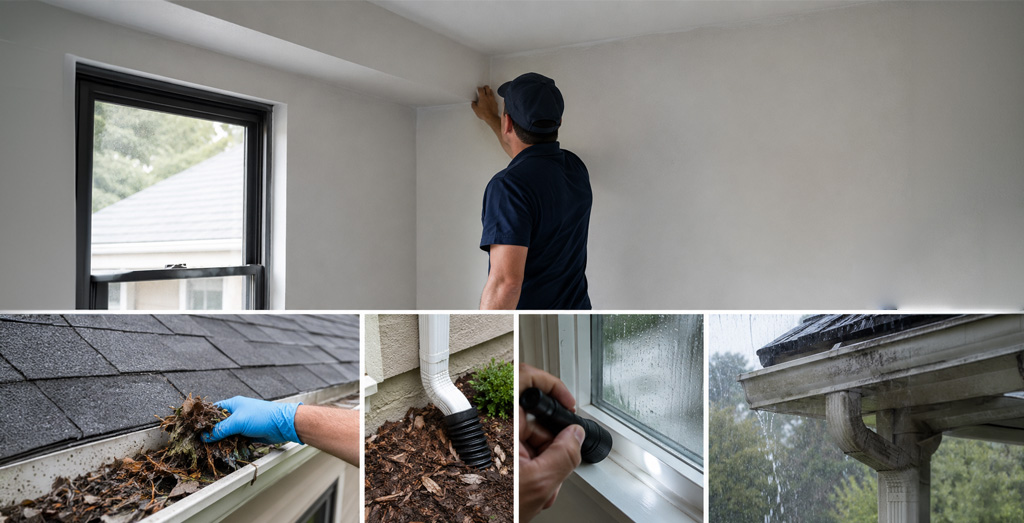
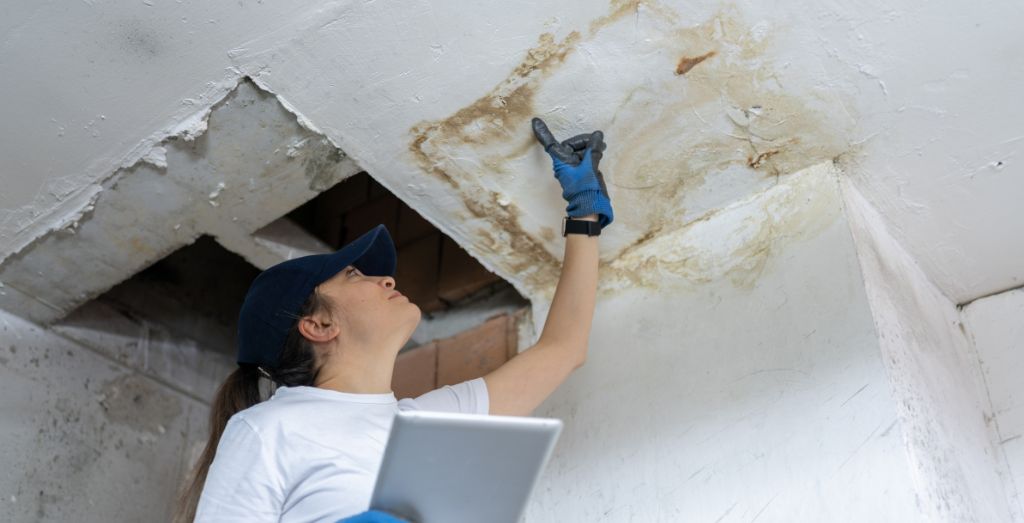
A pinhole leak in a supply line can saturate the bottom plate of a wall while leaving the painted surface bone dry. Attic condensation after a roof breach can soak insulation across multiple rafter bays before the first stain appears on the ceiling below. Without thermal imaging and calibrated moisture meters, these pockets go undetected, dry unevenly over weeks, and develop mold that only surfaces through full remediation testing.
How Bio Clean, Inc. Handles Professional Drying
1. Advanced Water Extraction
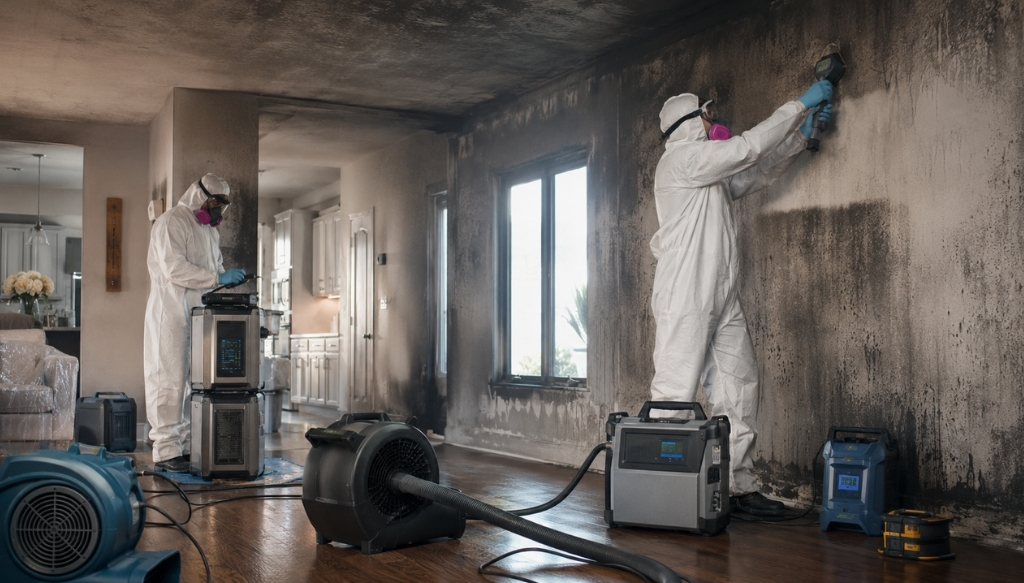
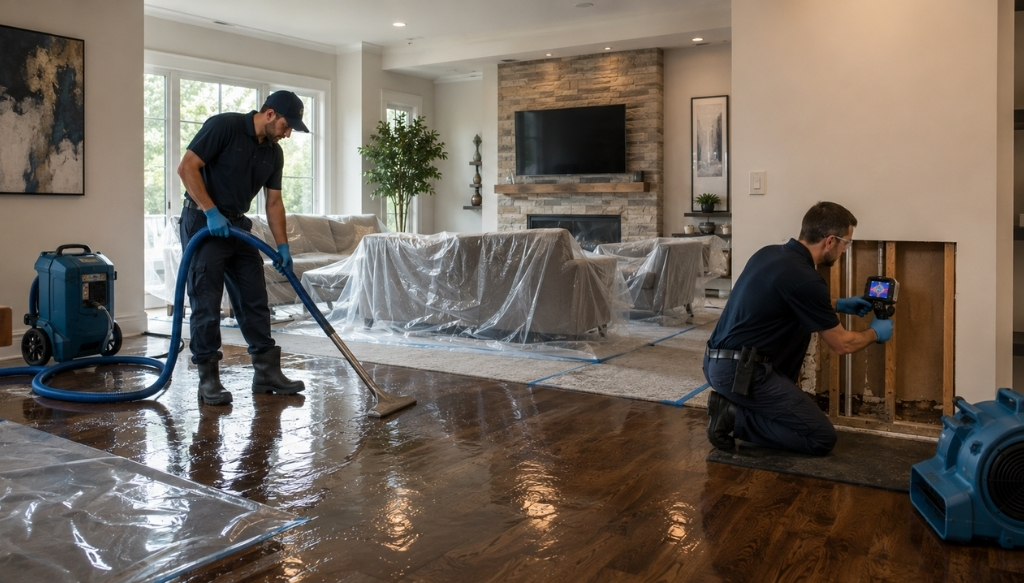
Bio Clean’s water damage restoration process starts with industrial-grade extraction equipment that removes standing water from flooring and cavities far faster than any household method. This matters because the drying clock under the 24-hour requirement starts at the point of intrusion, not when visible water disappears.
2. Industrial Drying Technology and Monitoring
When extracting, Bio Clean then applies air movers and commercial dehumidifiers, depending on the building design and the materials involved. The Bio Clean also uses desiccant dehumidifiers in colder Washington weather, particularly in Bellingham and Whatcom Counties, because refrigerant units are less effective at low temperatures. Frequent moisture measurements are then obtained using calibrated moisture meters and thermal imaging cameras, and all measurements are noted to meet the moisture regulation procedures required under the new 2026 health codes.
Reach Bio Clean, Inc. at (888) 412-6300 for water damage restoration in Seattle, Bellevue, Everett, and Bellingham, WA.
Warning Signs That Immediate Professional Drying Is Needed
Do not wait for visible mold before calling for help. Any of the following means the 24-hour window is already running:
- A musty smell that appeared after a water event, even a minor one
- Soft spots or sponginess in flooring near plumbing fixtures or exterior walls
- Paint or wallboard that is bubbling, blistering, or feels slightly damp
- Visible water lines on drywall or baseboards, even when the surface seems dry
- Condensation on windows or interior walls in a previously dry room
- Any sewage-related water intrusion, regardless of how small the affected area appears
Preventing Long-Term Damage After Water Incidents
Getting the property dried within 24 hours is the priority. Keeping it safe after remediation requires a few additional steps:
- Permanently repair the water source before reoccupying the space
- Replace saturated materials that exceeded safe moisture thresholds, even if they look intact
- Schedule a follow-up moisture inspection several weeks after drying to check for delayed mold growth
- Evaluate ventilation in the affected area, since poor air circulation drives recurring moisture buildup during Washington’s long rainy season.
- Retain all remediation documentation for insurance records and building safety compliance.
For rental property owners in South Bellevue, downtown Everett, or along the Bellingham waterfront, this documentation is required evidence of compliance under the current health code updates.
Act in Time. The 24-Hour Standard Exists for Good Reason.
Water damage left unaddressed beyond 24 hours becomes a significantly larger and more expensive problem. Mold growth, structural damage, health liability, and insurance complications all grow with every hour of delay.
Bio Clean, Inc. provides water damage restoration in Seattle, Lynnwood, Bellevue, Everett, WA, and Bellingham, WA. As a family-owned company headquartered in Marysville, Bio Clean brings the equipment, documentation, and certified expertise required by the 2026 moisture control protocols.