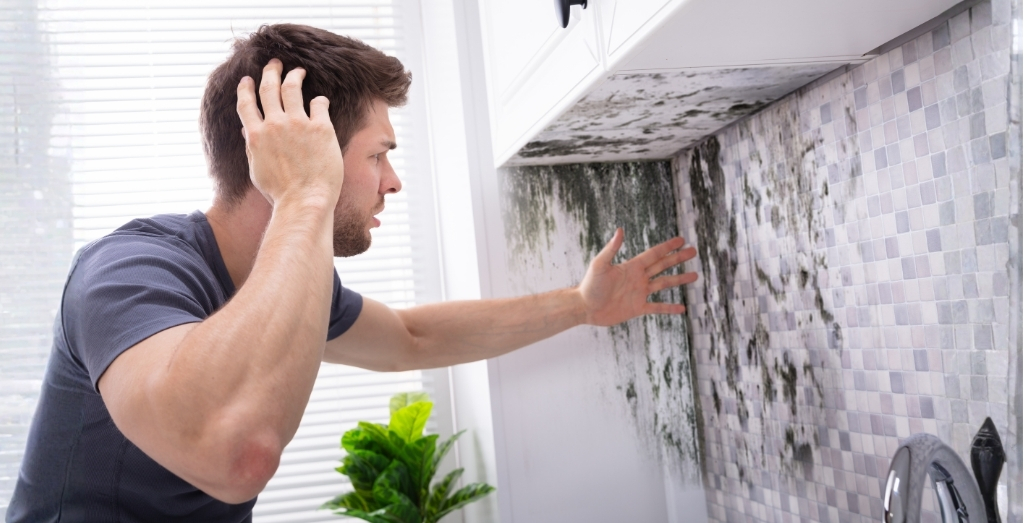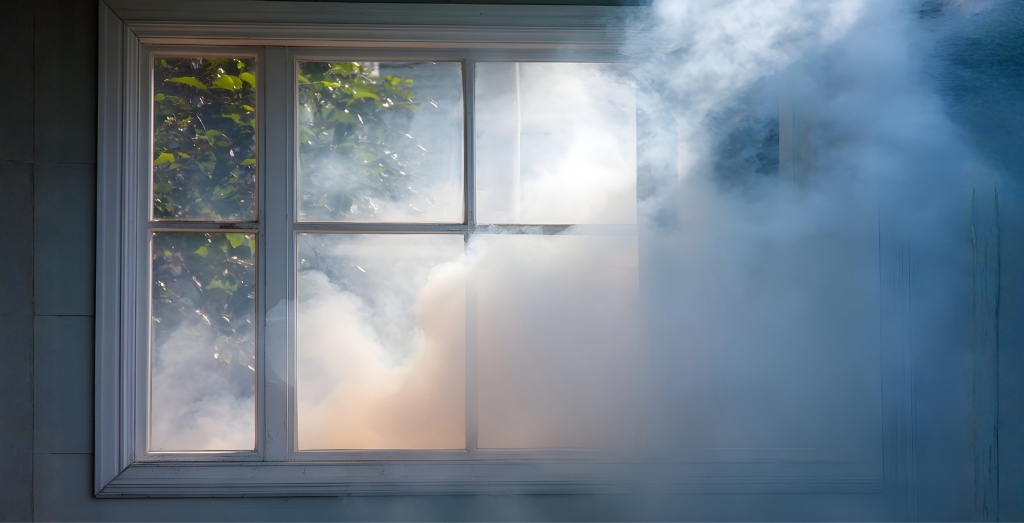
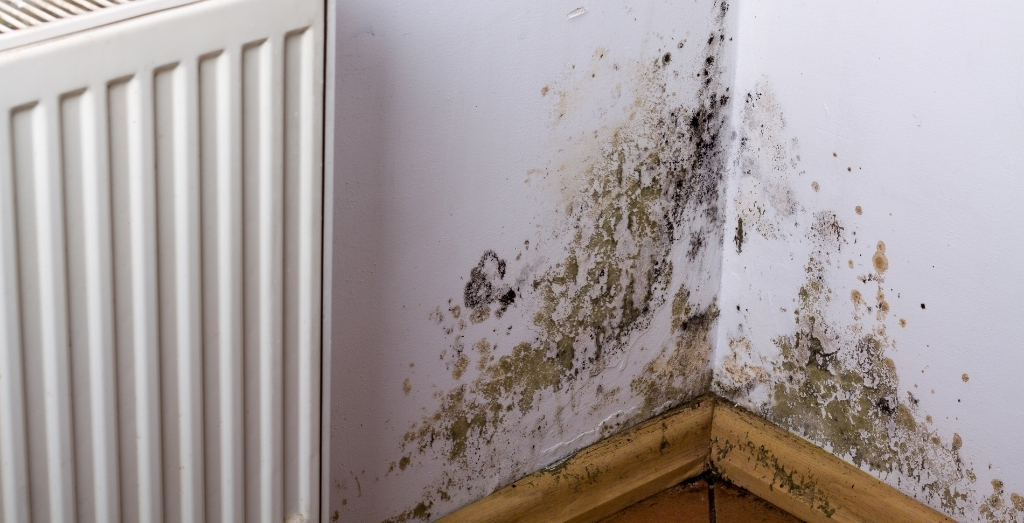
When smoke enters a property, the damage does not stop once the air clears. In humid environments, the situation becomes far more complicated. What might seem like a faint odor or light residue can evolve into a persistent problem that affects surfaces, air quality, and long-term property value.
Across coastal and moisture-prone regions like Washington State, property owners often underestimate how humidity and smoke damage interact. Whether it is wildfire exposure, kitchen incidents, or electrical fires, moisture in the air can trap and intensify contamination in ways that standard cleaning methods cannot fully address.
According to the United States Environmental Protection Agency, fine particulate matter from smoke can penetrate deep into indoor environments and remain suspended or embedded long after the visible haze disappears. In humid climates, this persistence is even more pronounced.
In this blog post, we break down how moisture affects smoke particles, why that stubborn contamination is so hard to eliminate in wet conditions, and what proper, lasting smoke damage restoration and remediation actually requires.
What Exactly Is in Smoke?
Smoke is not a single substance. It is a mixture of gases and microscopic particles that behave differently depending on what burned, how long it burned, and, critically, the surrounding air conditions.
What smoke typically carries:
- Fine particulate matter is small enough to pass through standard filters entirely
- Carbon-based soot that coats and embeds into every surface it contacts
- Volatile organic compounds that continue to be released into the air long after the fire is out
- Acidic residues from burned synthetic and organic materials
The National Oceanic and Atmospheric Administration notes that these particles are small enough to infiltrate HVAC systems, fabrics, and structural materials with ease. In moist air, smoke particles travel further and settle more deeply than they ever would in dry conditions.
Why Smoke Particles Cling to Surfaces
Even without moisture involved, smoke particles are naturally clingy. They bond to surfaces through electrostatic charge, oily residue, and the microscopic texture of whatever material they land on.
Why smoke sticks the way it does:
- Electrostatic charge pulls particles toward surfaces before direct contact even happens
- Oily compounds in smoke work as a bonding agent the moment they land
- Porous materials pull particles below the surface layer, where regular cleaning can’t reach
In dry conditions, some of this residue stays loose enough to remove. In humid conditions, moisture acts as an additional binding agent, which is precisely what makes smoke residue cleanup so challenging across Washington’s climate.
| Surface Type | Smoke Absorption Level | Difficulty of Removal |
| Drywall | High | Very difficult without specialist treatment |
| Upholstered furniture | Very high | Requires deep extraction methods |
| Wood furniture and trim | Moderate to high | Penetrates along the grain |
| Carpets and rugs | High | Holds contamination below the surface |
| Painted walls | Moderate | Depends heavily on paint porosity |
The Role of Humidity in Smoke Contamination
Humidity and smoke damage do not simply coexist. Moisture actively changes how particles behave in the air and how they bond once they settle, making smoke damage restoration significantly more complex.
How elevated humidity affects airborne particles:
- Particles absorb water vapor and become heavier, settling faster and less evenly.
- Uneven settling creates patchy contamination across walls, ceilings, and hidden cavities.
- Wildfire smoke humidity effects, in particular, produce inconsistent patterns that are difficult to trace and easy to miss during cleanup.
Why does damp air make smoke harder to remove?
- Soot bonds more tightly to surfaces when moisture is present at the time of settling
- Standard cleaning agents perform poorly against wet-bonded residue
- Odors drive deeper into materials rather than sitting near the surface, where they can be addressed
| Factor | Dry Climate | Humid Climate |
| Particle behavior | Loose and manageable | Sticky, embedded, resistant |
| Odor persistence | Moderate | Significantly higher |
| Cleaning difficulty | Lower | Considerably more demanding |
| Risk of recurrence | Limited | Frequent without proper treatment |
Materials Most Affected in Humid Environments
Some materials absorb everything to which they are exposed under normal conditions. When smoke and humidity combine, those same materials become the hardest to restore.
Porous surfaces that take the most damage:
- Drywall draws particles deep into its paper facing and gypsum core
- Upholstered furniture traps smoke compounds within individual fibers
- Carpets and rugs hold contamination well below the surface layer
- Wood absorbs smoke along the grain in ways that surface cleaning cannot reach
Hidden areas that are consistently overlooked:
- HVAC ducts that distribute contamination every time the system runs
- Insulation within wall cavities that absorbs both odor and particles over time
- Spaces behind cabinetry and inside ceiling voids that are rarely inspected
These hidden zones drive ongoing problems with indoor air quality after smoke damage, particularly in humid conditions where particles remain chemically active rather than drying out and becoming inert.
How Humidity Intensifies Smoke Odors
The pattern of smoke smells returning after cleaning is one of the most frustrating things property owners across Washington report, and humidity is directly responsible for it, especially when smoke damage restoration does not account for moisture conditions.
Why the smell keeps coming back:
Volatile organic compounds trapped inside porous materials do not stay dormant in humid air. Moisture reactivates them, pulling them back out of the materials they settled into and releasing them into the room again. This is why the smoke smell in humid homes reliably disappears after a thorough cleaning, only to return the moment the weather turns damp.
Common reasons odors recur after treatment:
- Surface cleaning addressed what was visible, but left residue embedded deeper in the material
- Moisture levels were not controlled alongside the cleaning process itself
- Hidden contamination sources were never identified or treated
Common Mistakes When Cleaning Smoke in Damp Climates
Most cleanup failures in humid environments come from treating the visible problem while leaving the underlying conditions untouched.
Mistakes that lead to incomplete results:
- Cleaning surfaces before stabilizing indoor humidity levels
- Using water-heavy cleaning methods that push contamination deeper into porous materials
- Ignoring ventilation systems that continue to circulate contaminated air throughout the property
- Treating only what is visible and assuming hidden areas are unaffected
Avoid these specific pitfalls:
- Skipping dehumidification before beginning any surface work
- Using generic cleaners not formulated for moisture and soot buildup
- Overlooking hidden cavities that remain active contamination sources
- Assuming that one round of treatment has permanently resolved odors
Effective Methods to Remove Smoke in Humid Conditions
Step 1: Control Moisture First
Every step that follows this one is less effective if humidity is not stabilized first. Dehumidification brings indoor moisture levels under control, and ventilation improvements prevent outdoor humidity from being reintroduced during the process.
Step 2: Remove Surface Residue
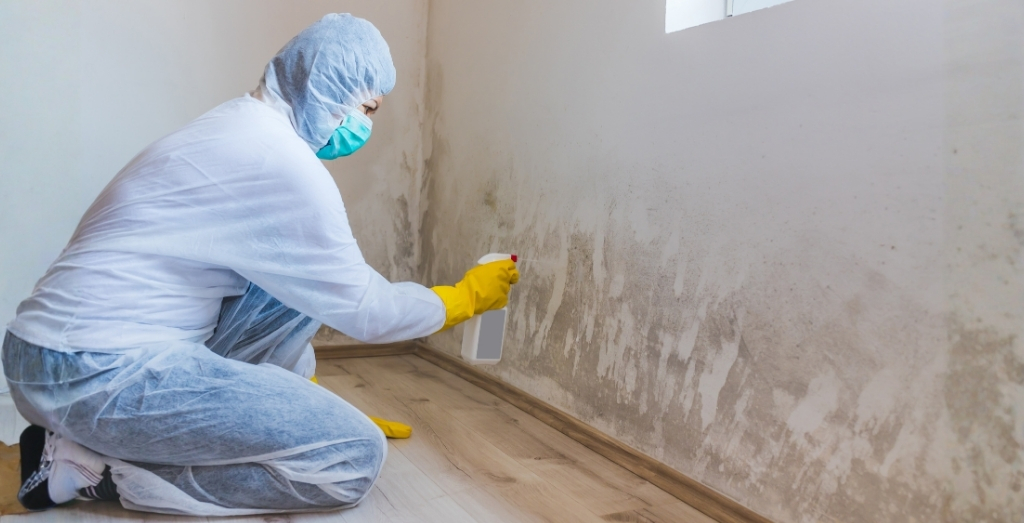
With conditions stabilized, specialized soot removal in damp environments can address both visible and accessible hidden surfaces without spreading particles further during the cleaning process.
Step 3: Treat Embedded Odors
Deep-set odor sources require neutralization at the point of origin, not masking at the surface. This stage restores genuine indoor air quality after smoke damage rather than temporarily suppressing symptoms that will return.
For professional assistance with smoke damage restoration, feel free to call the Bio Clean, Inc. experts at (888) 412-6300.
Preventing Long-Term Smoke Damage in Humid Areas
Practices that make a meaningful difference:
- Keep indoor humidity consistently below 50 percent, particularly following any smoke exposure
- Run air purification systems with filtration appropriate for fine particulate matter
- Inspect HVAC systems and wall cavities after any fire event, not just the visible surfaces
- Address smoke exposure quickly rather than waiting for odors to become impossible to ignore
The EPA emphasizes that controlling indoor air quality is essential to limit long-term exposure to particulate matter in residential settings.
When Professional Smoke Remediation Becomes Essential
There is a clear point where smoke contamination in a humid environment exceeds what any standard cleaning effort can resolve. In Washington, that point arrives sooner than it does in drier regions.
Situations that require professional intervention:
- Odors that return after repeated cleaning attempts
- Smoke that has visibly penetrated structural materials
- HVAC systems confirmed or suspected to be contaminated
- Indoor air quality that remains noticeably poor after standard cleaning
For property owners in Washington, professional smoke damage restoration services in Bellingham, Renton, Bellevue, Everett, and Seattle, WA, all require localized expertise that accounts for the specific humidity profiles and building conditions common across these communities.
A Final Word on Restoring Comfort and Air Quality
Smoke damage in a humid climate has a way of outlasting every effort that does not account for the moisture driving it.
Our crew at Bio Clean Inc. has worked across Washington long enough to understand how humidity reshapes the entire process of smoke damage restoration in Bellingham, Renton, Bellevue, Everett, and Seattle, WA, and what genuine remediation actually requires in these conditions. We begin with a thorough assessment of both visible and hidden damage, work with the moisture conditions rather than around them, and focus on results that hold over time rather than temporarily masking the problem. If the standard approaches have not resolved what your property is carrying, reaching out to our experts at Bio Clean Inc. is the next step worth taking.
Contact us at (888) 412-6300 to schedule an appointment with our team today.